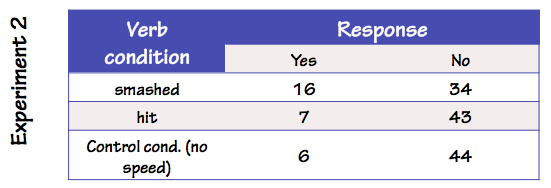
Lotfus and Palmer (1974)
can alter memory.
more severe sounding verb made the participants estimate faster speed
extent is one cognitive process reliable and Evaluate schema theory with reference to research studies.
Mosconi (2005)
investigate metabolism in the hippocampus, which is when the neurons in the
brain activation response in the body and dies.
years long. They used brain scanning program computer PET that measures metabolic activity occurring in the hippocampus.
reduced metabolism in the hippocampus later stage in life.
Schwindt and Black (2009)
compared to normal people.
people. AD patients had increased activation in the prefrontal cortex.
activation of MTL.
Bartlett (1932)
Aims: Bartlett aimed to determined how social and cultural factors influence schemas and hence can lead to memory distortions.
Methods: English background participants were asked to read “War of The Ghosts” a native American folktale and ask them to replicate it down again
Result: As the number of reproduction increased, the story got shorter and more changes and rephrased unfamiliar words : Canoes -> Boats Hunting Seals -> Fishing
Learning Objective: Discuss how social or cultural factors affect one cognitive process.
Schacter and Singer (1962)
Aims: To test the two factor theory of emotion and show that both cognition and biological factors with emotion
Methods: Have 184 male college student participants taken to private room ,the experimenters inform them that experiment wants to see “effect of vitamin injection of visual skills” .The participants were given either a placebo shot (with no side effect) or an adrenaline shot .And then participants divided into 2 groups Euphoria and Anger group .
Result: Euphoria condition ->misinformed participants were feeling happier than all other groups ->Ignorant participants were the second happiest Anger condition ->Ignorant participants felt the angriest ->Placebo participants felt the second angriest
Learning Objective: To what extent do cognitive and biological factors interact in emotions
Tierney Et Al (2001)
early childhood brain damage.
fluent in sign language, PET scanning technology were used while participants
produced narrative signs.
during the production of narrative speech and sign language.
the left as an adaptation following his early brain damage.
Atkinsonand Shiffrin (1968) MS Brewerand Treyens “Picnic Basket” (1981)
recalling items in an office.
for 3540
seconds before taken into another room. They were asked to list
down as much things as they can remember from the previous office.
schema. They couldn’t recall the wine and the picnic basket that were sitting in
the office.
didn’t mention or recall the wine and picnic basket because it’s not part of their
“Typical Office” Schema.
Flashbulb Memory Brown and Kulik (1977)
Aims: To investigate that flashbulb memory is real and how it works
Methods: 80 American participants were asked about major events by asking the ones that is consequential and nonconsequential Ex: Princess diana death ,9/11 ,John F Kennedy assassination
Results: Participants answered the questions with no hesitation and have confident and tend to remember the shocking event well such as 9/11
Learning Objective: Evaluate one theory of how emotion may affect one cognitive process.
Anderson and Pichert (1978)
other half was given the schema of a potential house buyer. Participants heard
the story which was based on 72 points. Previously rated by a group of people
based on their importance to a potential house buyer. participants performed a
distraction task for 12 minutes before recalling was tested.
Results: Participants who changed schema recalled 7% more points on the second recall test than the first. There was also a 10% increase in the recall of points directly linked to the new schema.
Learning Objective: Evaluate schema theory with reference to research studies.